Two Official Daggerheart One-Shots Give Me Hope (and some Fear). Part 2 of 2

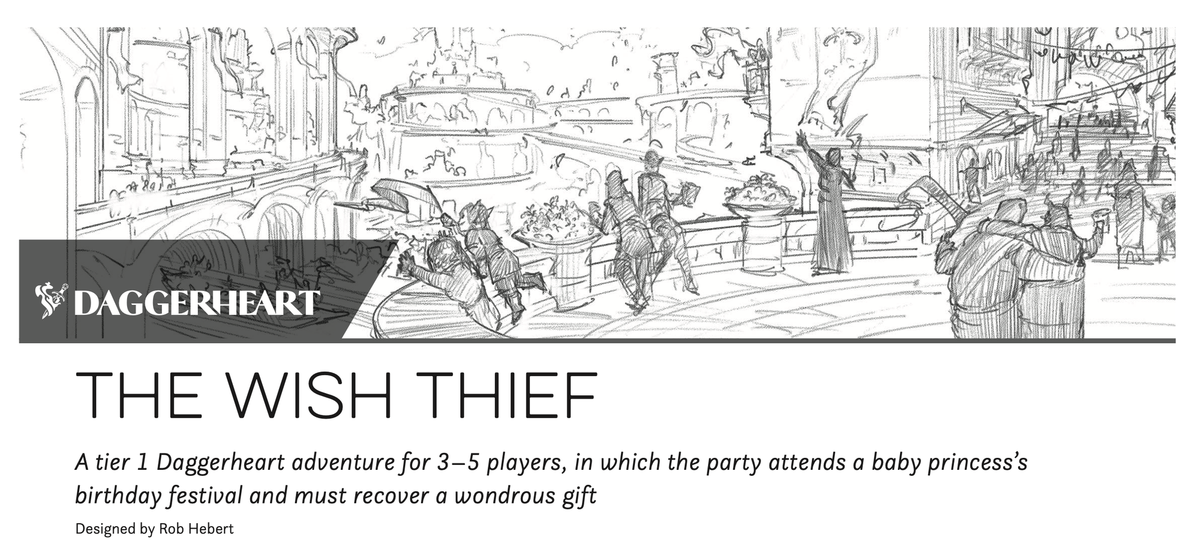
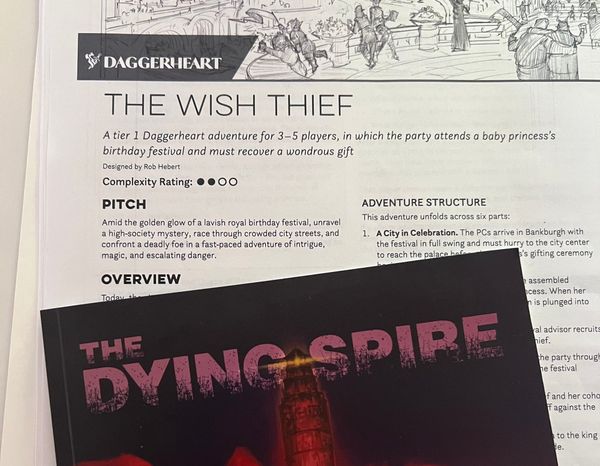
While I found Daggerheart's Free RPG Day release "The Dying Spire" disappointing, their One Year Celebration adventure, "The Wish Thief" designed by Rob Hebert, was a challenging and delightful one-shot. I loved running this adventure despite (or perhaps BECAUSE of) challenging, and --in some part– controversial design choices.
(For my article on "The Dying Spire", please read Part One.)
May 20 2026 was the one year anniversary of the release of Daggerheart, and they had a whole bunch of birthday-timed events, including the release of a birthday adventure, the "Wish Thief". (Free download here.)
I was excited to run this adventure during the birthday timeframe for the game, and I ran it twice for open tables at my Friendly Local Game Store. As usual for my games of Daggerheart, most players were completely new to the game, and so these were beginner-friendly sessions.
The adventure is set in the city of Bankburg, where all are celebrating the one-year birthday of their baby princess. The streets are crowded with revelers, as the player characters are rushing, late for the party in the royal palace.
At the palace, nobles are gathering to pay their respects and give gifts to the princess, a cute baby goblin. (Goblins can be cute in Daggerheart, more 'Grogu' than 'Gremlins'.)
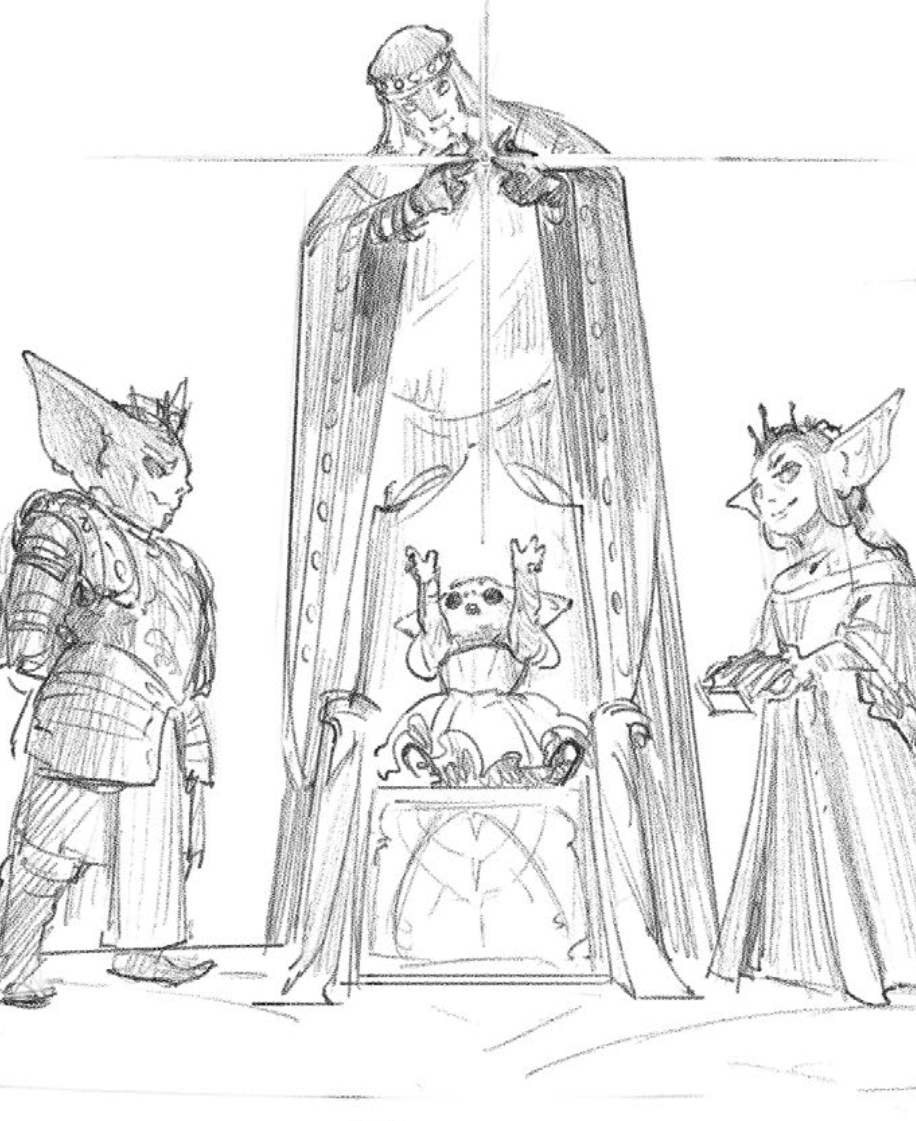
There is a social interaction scene with the gifts and the nobles, each with connections, motivations and secrets. Here Daggerheart's collaborative world-building comes in, as the players themselves imagine the gifts and what they reveal about the motivations of the givers.
Then the maguffin comes into play: the gift of a crown tiara that will grant the princess one wish when she comes of age. But just as she is about to receive it, magical darkness descends and when it clears, the tiara is gone! Someone has stolen it, and the thief is one of the nobles, but WHO!?
The next scene is an investigation. The players must interrogate each of the nobles to find out which one took the tiara. This investigation phase was one of the controversial parts of this adventure, and I'll explain that further down.
Once the thief is uncovered, she jumps out a window with the tiara and there's a chase through the crowded streets, ending at the docks. The thief's accomplices are waiting there to leave town on a ship.
There's a climactic fight scene at the docks, and afterwards a scene back in the palace where all is set right, the princess gets her crown back, and the king and queen thank the player characters.
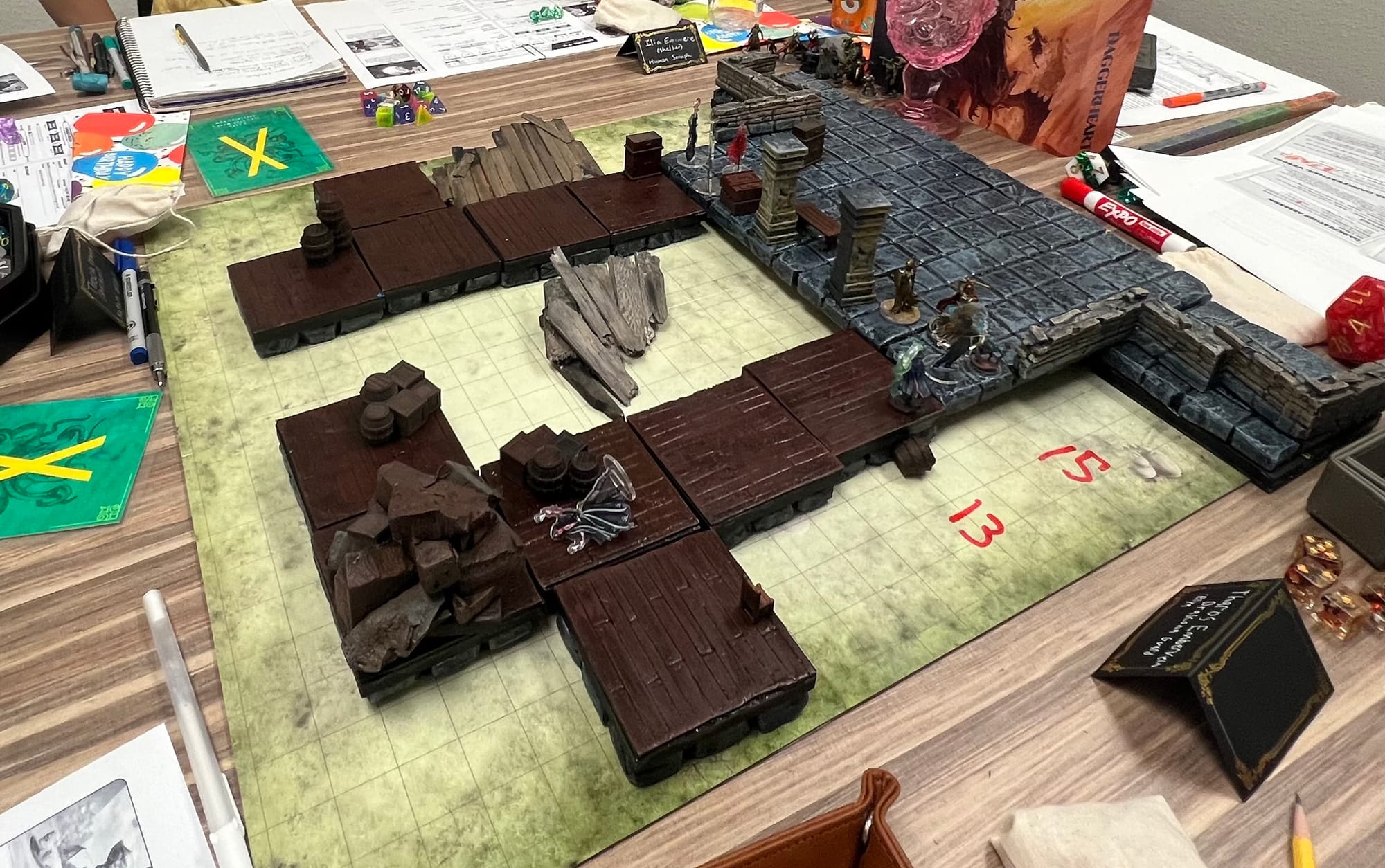
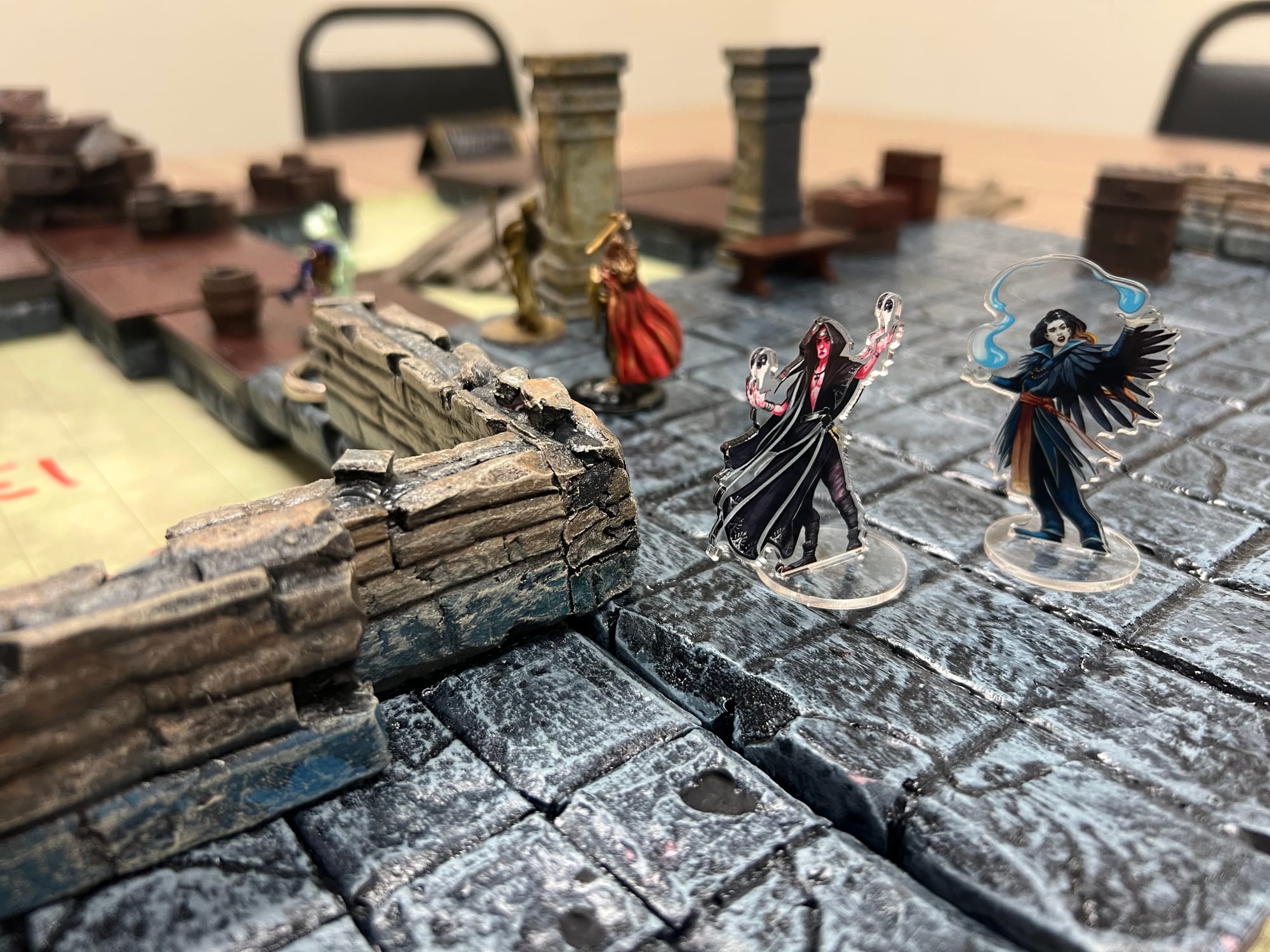
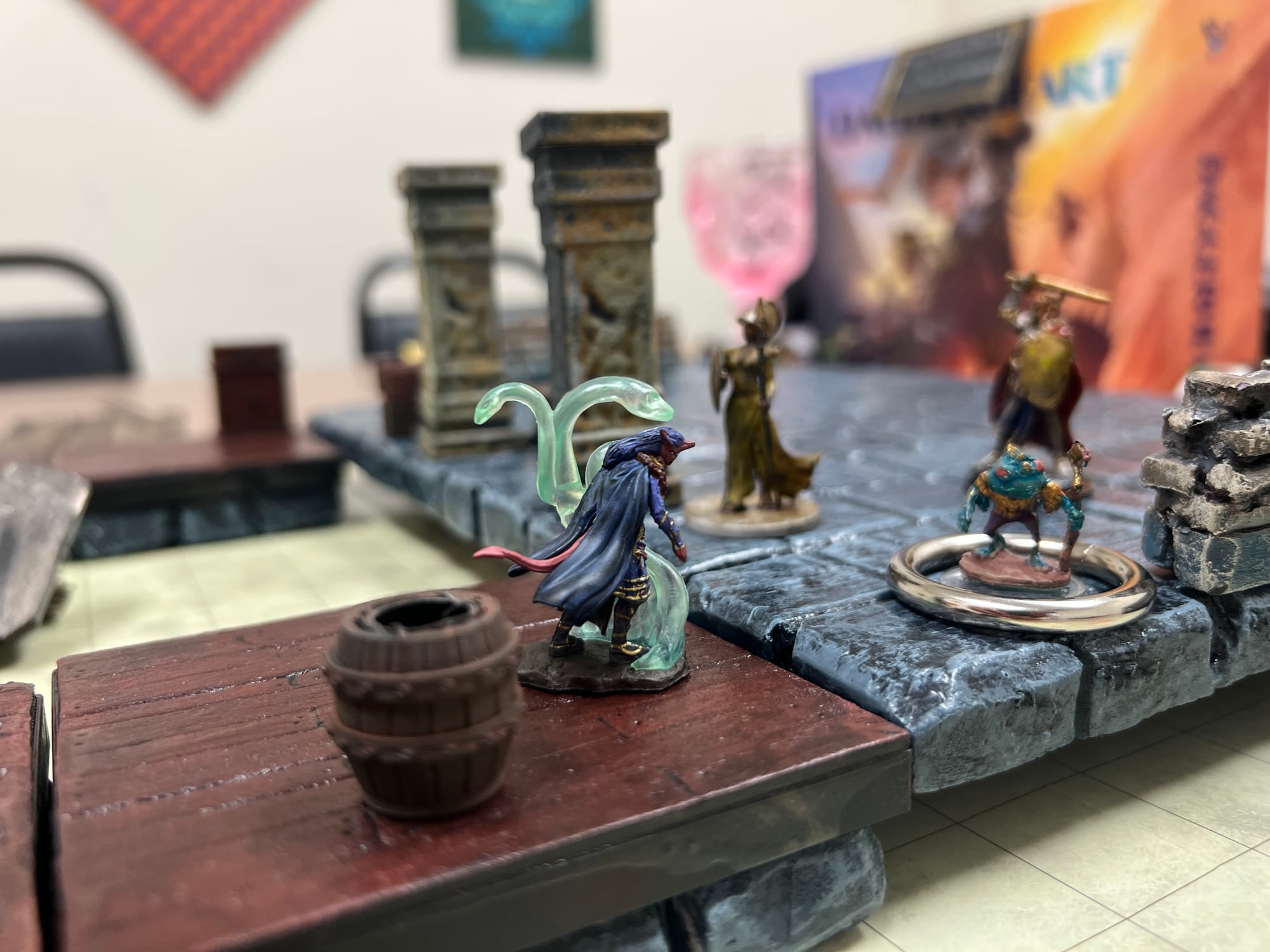
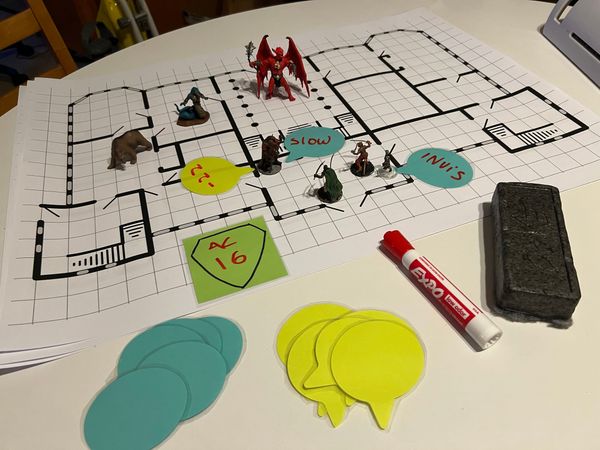
Photos from one of my sessions of "The Wish Thief"
This adventure had so much that I love to run. It has a lighthearted tone, which is great for a one-shot. It was brief, just six scenes. It featured multiple characters that allow me to inject humor. And it had a strong consistent, fun-finding tone. And the parts that seemed complex felt like challenges worth taking on.
One such challenge was the sheer number of NPC suspects (TWELVE!) that the players might interact with. You're given these prompts:
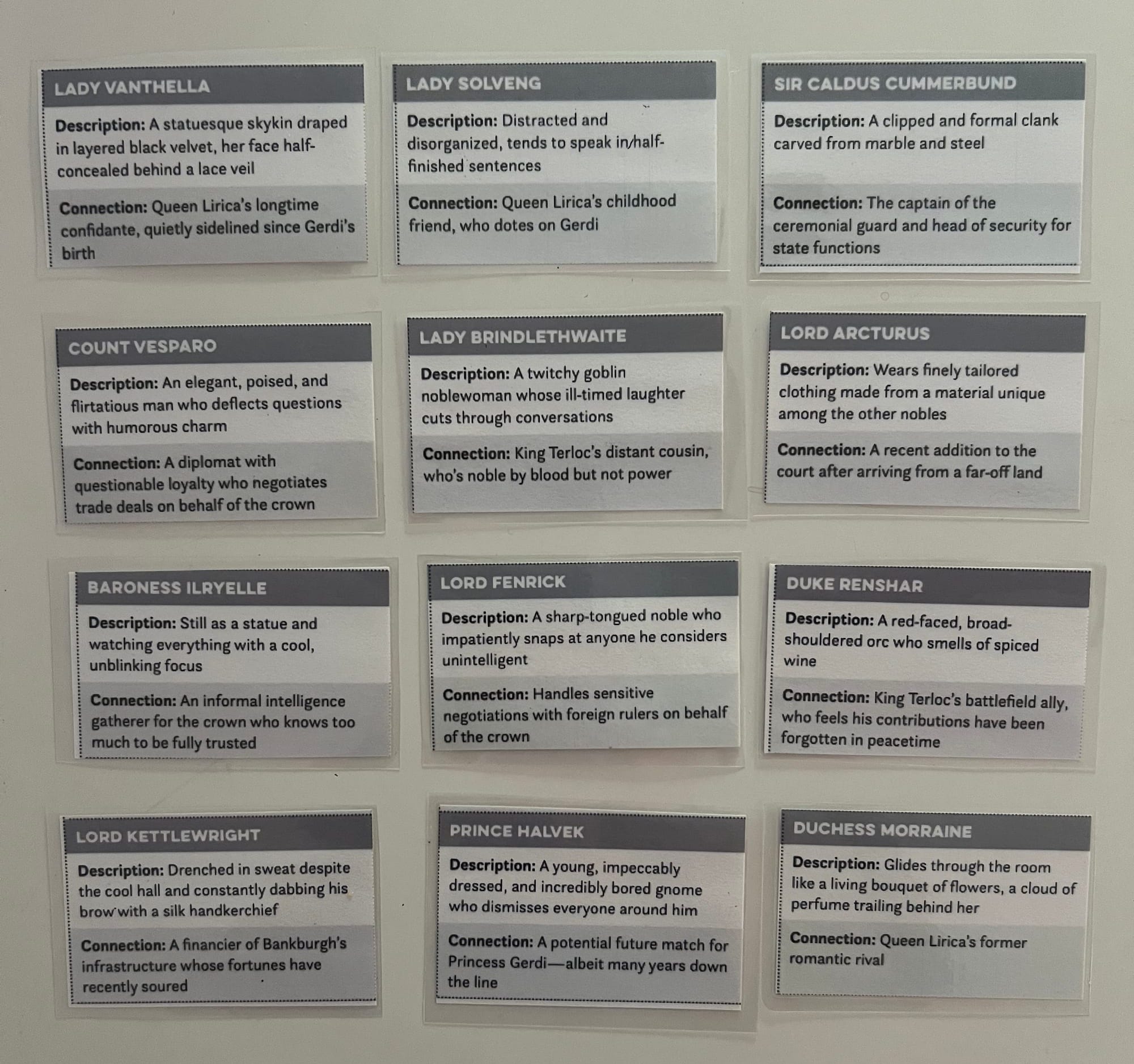
You're given 12 suspicious nobles and you'll shuffle the cards to randomly choose one per player. So probably a maximum of 6 of the 12 NPCs. Now, I like each NPC to have their own characterization and voice that I'm prepared to perform during the game. But this... this felt like the solution would be to let the random choice happen, and just ... improvise the voice and characterization in the moment.
There was no way to prep this. I just had to trust my improv skills. This high-wire act was a thrilling enticement to run the game.
For each of the nobles, you're given a blank gift card prompt, and each player writes what the gift is. Here are the cards, some with my players' inspired answers:
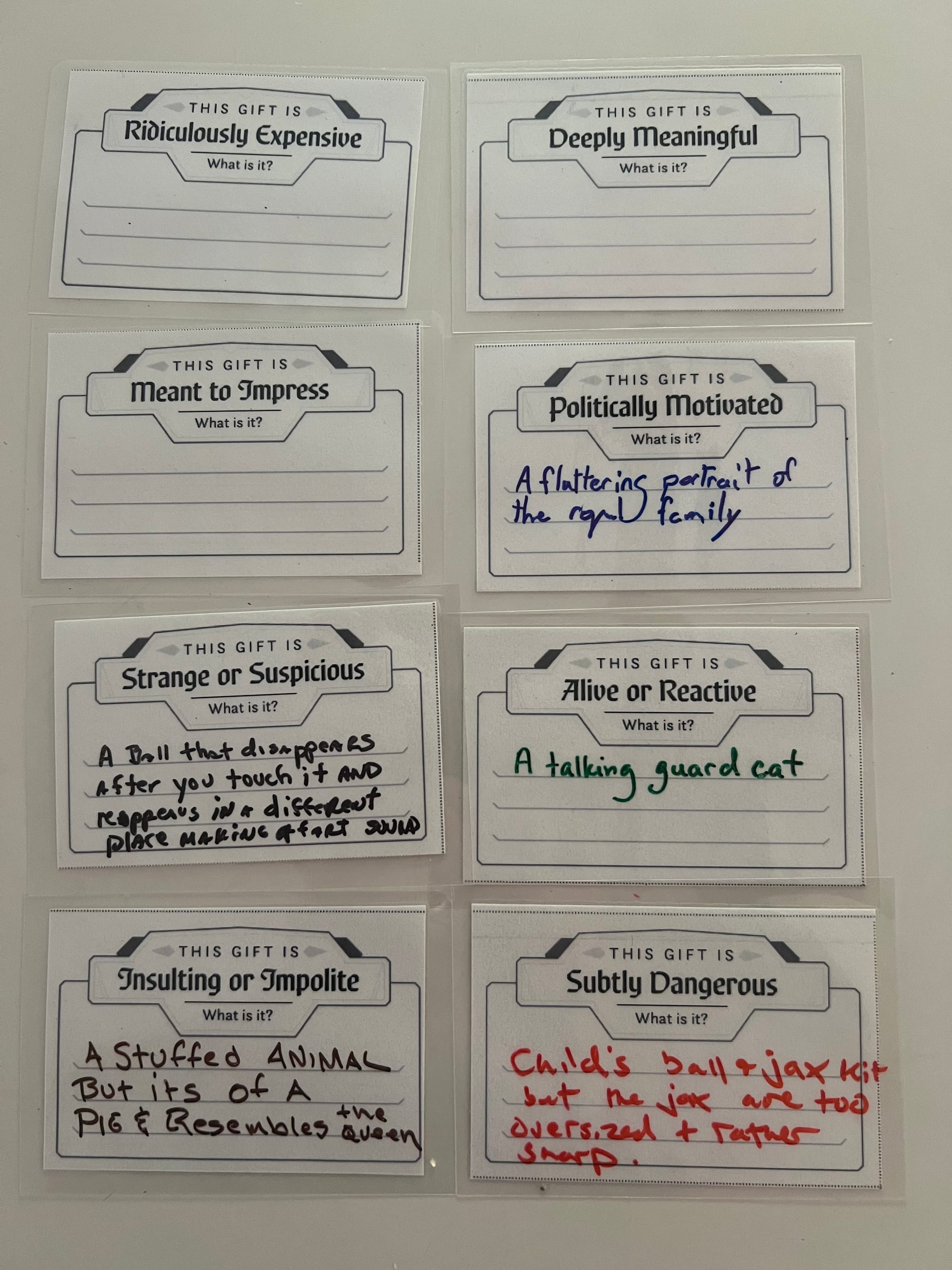
These gift cards are randomly mixed each with a noble, and that prompts the entire gift ceremony.
A Touch of Brindlewood Bay
When the crown is stolen we get into Act Three, the Investigation. And the mechanic here is... bold. There is no pre-determined thief. One of the suspects is the thief, but who that is depends on how the role-play unfolds.
I DEFINITELY heard some GMs balk at the concept. Here we have what the adventure calls, "The Quantum Culprit". You aren't going to be running a normal social scene with NPCs, with the GM knowing the outcome, knowing who to play as the suspicious one.
Instead, you all will be "playing to find out", In other words, letting the fiction, the die rolls, the Hope and Fear and the improv all flow to a collaborative conclusion, determined in advance by no-one.
From the adventure:
Don’t preselect the thief. Instead, let the culprit be the first suspect the players commit to on the basis of real evidence. Try to do the following during the investigation:
Seed suspicion broadly
Reinforce player theories
Quietly align clues to support their conclusion
The GM is given a gameplay loop where players role-play their questions, but when a question becomes pointed and is what they really want to know, a roll is called for. This success/failure/Hope/Fear result determines how forthcoming, honest or incriminating the answer is, and that's role-played.
The information revealed (from a combination of role-play improv and a GM prompt sheet) might cause the players to alight on a theory that they will try to corroborate. So they question someone else, and the loop repeats.
Three to five rounds of this are sufficient to cause the players to become firm in their theory, and that's when you as a GM are to, as instructed, "Quietly align clues to support their conclusion."
The scene ends when the players make an accusation.
And there you have it, a quantum crime investigation mechanic, reminiscent of the story game "Brindlewood Bay." I'm TOTALLY nabbing this to use elsewhere!
Now some TRPG players will balk at this kind of thing, where facts don't exist until they've been retroactively established. That's fine. There are games that do this in ways I don't like. But this one... felt like a good way to embrace Daggerheart's collaborative ethos. This is improv. This is playing a scene to see what happens.
At release, I had an emphatic exchange online with a GM who had a hard time picturing how this scene would even work, and who said he tried such a thing in D&D once and it was a disaster. And for a bit, it seemed he was confusing the map for the landscape, saying something like "well if the players come up with the culprit why don't they just point at an NPC at random and say 'that guy' and end the scene right there?"
This kind of confusion surprises me a bit. My players aren't going to short-cut the mystery by declaring themselves victors without playing the scene. They want to roll the dice and see what path the collaborative storytelling takes.
I'm pretty comfortable with improv, and so I place a lot of trust in it. And it's a two-way trust. If I ask for players to help build a scene, I don't worry that my players will break that trust.
But I did find it interesting to run this scene knowing that it could be polarizing. It didn't seem to be at my tables.
The scene was a fun challenge to run, with the characterization and voices fully improv. One group added a talking cat to the list of gifts, and I decided on a lackadaisical beatnik voice for him, which was a hit.
Another Controversial Scene
When the players uncover the thief, chapter 5 begins with a dramatic whoosh of darkness and the sound of breaking glass. The thief has escaped, and now a chase ensues!
... and this is another place where there was a strong opinion! Mike Shea, the Lazy GM (a terrific writer on GM tips) had a lot to say about this adventure and specifically this scene. He felt the pre-scripted escape of the thief undermined the success of the players. He also felt this put the GM in the awkward position of having to override their players if they moved to stop the thief before escaping. And planning for a chase – indeed insisting upon it as a story beat– he felt was a really poor design choice.
Here's his video, cued to the correct point:
Great video!
Some of his points I agree with, some I don't. And I ran this twice pretty much as written, and it wasn't a big problem.
But this topic brings up a bigger discussion about cut-scenes, cinematic storytelling, the use of planned story beats, how to introduce them in ways that don't frustrate players... and even the difference between the control of the spotlight in D&D vs Daggerheart.
I want to think more deeply about all this, and explore it in a later blog.
The Chase scene worked just fine, as did the ending fight against the thief and her lackeys, and then we had a button-everything-up scene where I played up the emotional impact of the story.
Making it Special
Since this was a birthday adventure, I brought party hats and blowers that I surprised the players with. And I used music in a way I never had for a game before: I scored each scene in the adventure with its own musical track.
Normally I use an app called Pocket Bard, which runs environmental sounds and music on a loop that's more like background. It's great, and it's specifically designed not to pull focus from the game. Totally fits what I normally run. But for this adventure, I realized I could choose specific music tracks.
Here's the music I used.
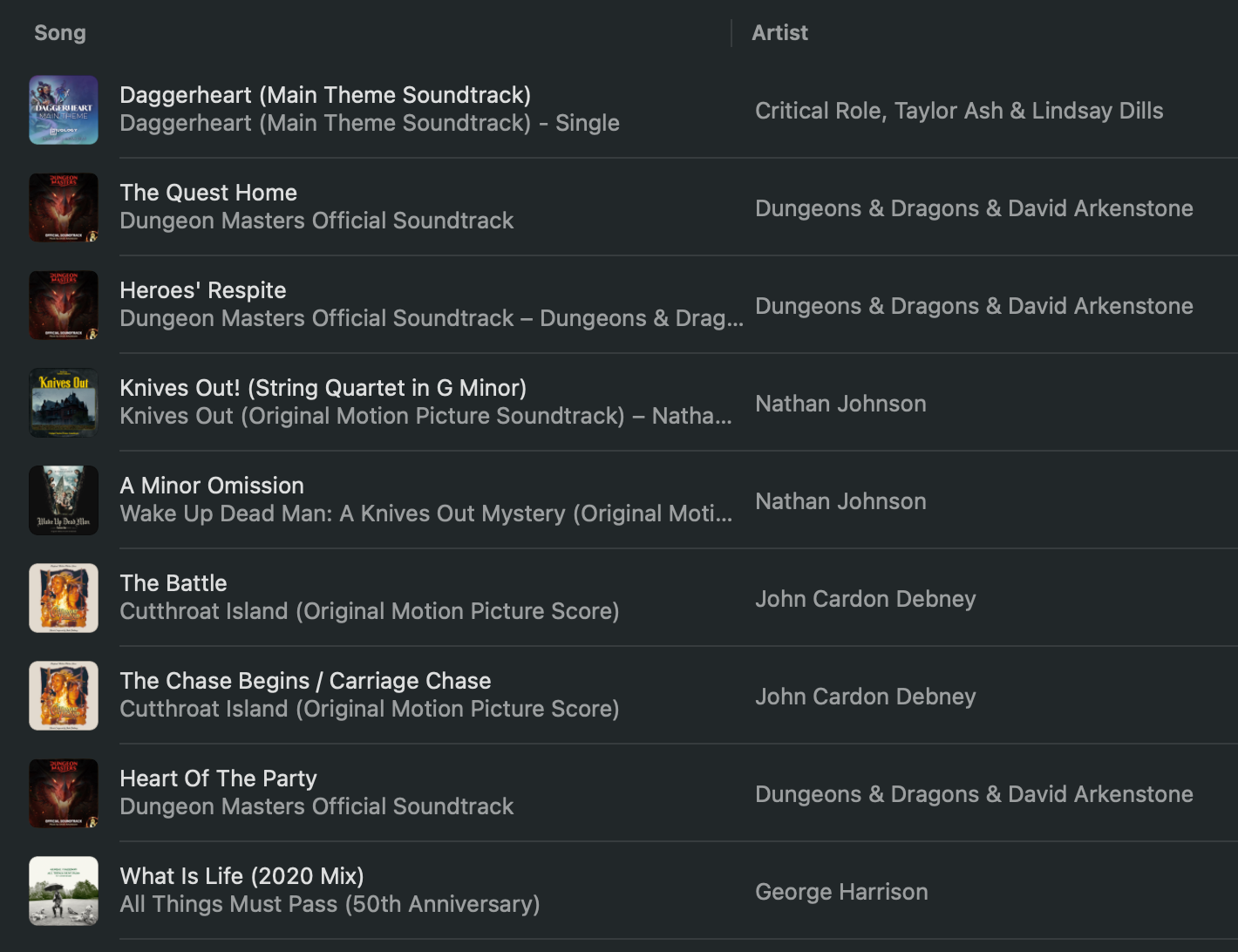
iTunes link to the playlist.
In iTunes, the new Automix feature means you can loop a single music track seamlessly. And because this was a linear adventure, I knew I could drive the pace and mood with music that was more foreground than background.
I made this video to demonstrate how it works, and I give examples of how each track drives emotion.
And it worked so well that my players had tears. Music unlocks emotion. The ending of the game was joyful. This was one of my most successful GM sessions ever. Foreground scoring of an adventure is not an easy thing to do for many adventure structures. But for linear adventures, I'm going to keep doing this.
When this adventure was released, I was chatting on Discord with other GMs, and people had wildly varying estimates of how long it would take to run, with some people saying that it was 5-hours or more. Some were concerned it couldn't be run as a one-shot, despite it being introduced as one.
I ran it twice, and I think the music was one thing that helped keep the pace up. The first time I ran it, I booked the room for 4 hours. We completed "The Wish Thief" in 2 hours. It flew by.
At the end of the adventure, I played George Harrison's "What is Life" as walkout music. I've tried end-credits music at the end of an adventure before (Meat Loaf's "Bat Out of Hell" for Ravenloft), and I think it works well for a presentational style of game.
Further Thoughts to Come
Between the music, the party favors and the additional mechanics, "The Wish Thief" was great to run, and really fit what I run Daggerheart for.
Meanwhile, the negative takes on some of the concepts in the adventure, by GMs I admire has got me thinking long-term. One reason I made this blog is to explore some of these ideas out loud.
I haven't fully formed these thoughts --but for now it's all around this idea:
Game advice, GM tip culture, hours and hours of videos and blogs about the RIGHT way to run games... it's making me want to run games the WRONG way, and see what I discover out there in the uncharted lands.
Sometimes people can tell you something is bad, but you run it and it's good. And maybe we're running too restrictive a game by making sure we do everything right.
So I'm going to keep running things differently, changing my style and approach as often as possible. Maybe I'll break something. But as long as my table is a safe, respectful place, everything else will be fine. Maybe a session will be a disaster, or boring. But that's the worst that can happen.
Rambling now.
Go run a game, and add something to it you've never tried before.
Good night and have fun.